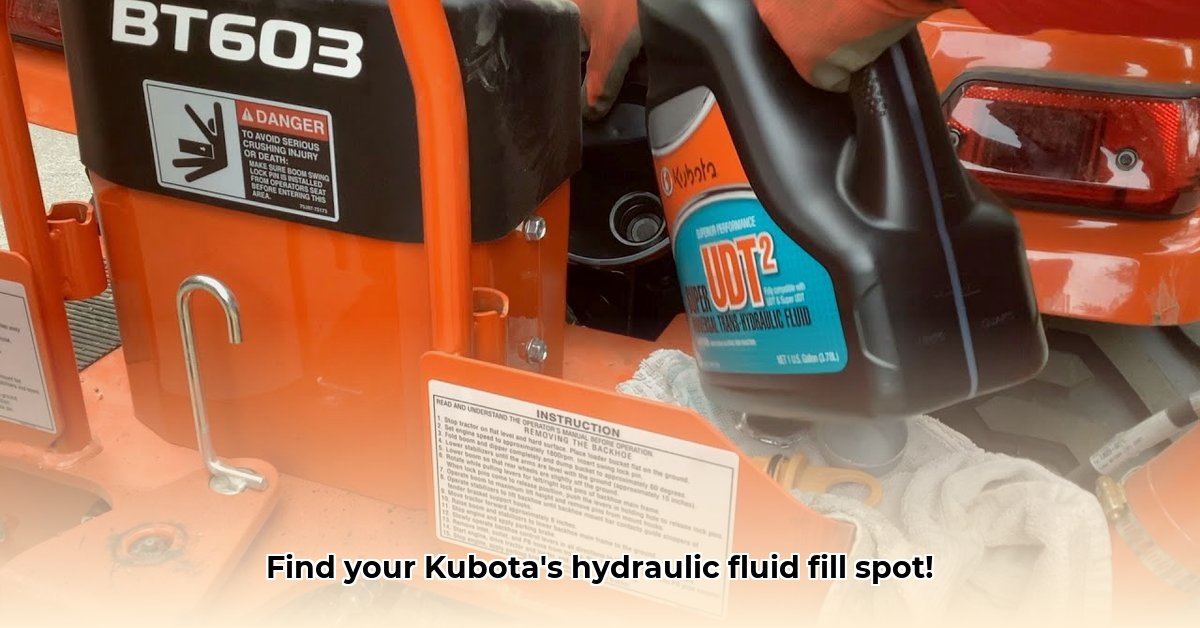
Locating the Hydraulic Fluid Reservoir: A Step-by-Step Guide
Finding the hydraulic fluid fill location on your Kubota tractor can be surprisingly simple with the right guidance. This guide provides clear, step-by-step instructions, addressing model variations and common misconceptions. Remember, safety is paramount—always engage the parking brake before beginning any maintenance. Did you know that a simple fluid check can significantly extend your tractor's lifespan and save you from costly repairs down the road? For a helpful maintenance schedule, check out this Kubota maintenance guide.
Knowing Your Kubota: The Critical First Step
Before embarking on your fluid-fill quest, you need one vital piece of information: your Kubota tractor's model number. This is crucial because the hydraulic fluid reservoir's location varies significantly between models. Your owner's manual (available online or from your dealer) contains detailed diagrams and specifications for your specific model. This step is non-negotiable; it's the key to success. Have you located your owner's manual yet?
Common Reservoir Locations and Visual Clues
While the exact location differs between models, several common spots exist. These include the rear of the tractor, underneath the tractor (requiring you to get under it for access), or near a dipstick (if your model includes one). Look for labels or markings (often symbols) identifying the hydraulic fluid fill cap. Think of it like a treasure hunt; the reservoir exists, it's just a matter of careful observation using your manual as a guide.
Adding Hydraulic Fluid: A Safe and Precise Procedure
Once you've located the reservoir, adding fluid is straightforward, but precision and safety are crucial. Incorrect fluid or overfilling can cause severe damage.
- Safety First: Engage the parking brake. This prevents accidental movement.
- Clean the Area: Wipe down the surrounding area to prevent contamination.
- Consult Your Manual: Verify the correct hydraulic fluid type for your Kubota model. Using the wrong fluid is extremely damaging—it's a costly error to avoid.
- Pour Slowly: Gradually add fluid using a clean funnel to prevent spills and air bubbles.
- Check Fluid Level: Use the dipstick (if present) to check the level and add fluid until it reaches the "full" mark. Never overfill. Overfilling can cause problems just as significant as underfilling.
- Secure the Cap: Tightly replace the cap to prevent leaks.
Troubleshooting Common Problems
Even with careful attention, issues can arise. Here are some solutions to common problems:
- Unable to locate reservoir: Carefully re-examine your owner's manual. If you remain baffled, consult a Kubota mechanic.
- Incorrect fluid used: This is serious! A system flush and refill with the correct fluid is required (see your manual).
- Fluid Leaks: A leak needs immediate attention from a qualified mechanic. A small leak can rapidly escalate into a major problem.
Model-Specific Information: A Quick Reference
The table below provides general location guides for some common Kubota models. Remember, this is general guidance only; always consult the owner's manual for exact details.
| Kubota Model | Likely Fill Location | Additional Tips |
|---|---|---|
| B Series | Often near the rear, under a labeled cap | Check your owner's manual. |
| L Series | Typically accessed from the rear | May require tool use for access; check your manual. |
| M Series | Varies; consult your owner's manual | Locations vary considerably across different models. |
| Other Models | Consult the Owner's Manual | Your owner’s manual is your definitive guide. |
Why is consistent fluid level maintenance so important? Maintaining the correct hydraulic fluid level ensures optimal tractor performance, extending its lifespan and preventing expensive repairs. Regular checks are vital to minimize downtime and maximize your investment.